Hours per day dominates
Monthly cost scales almost linearly with daily hours. Cutting a 12-hour habit to 6 hours halves the bill; the wattage is usually fixed at 1,500 W by the unit itself.
Popular calculators
Updated July 2026 rate dataHeating & CoolingSourced from U.S. EIA
Hours per day do most of the work here, because a heater holding a set temperature doesn't draw full power around the clock — a sealed room typically runs its element well under continuously. Enter your daily hours, wattage, and state below and the monthly figure updates.
EIA residential average, July 2026. Your utility's exact rate is on your bill.
Real-time math: 1,500 W × your state's rate, accumulating live. Thermostatically controlled units cycle on and off, so average use is usually below the flat-out figure.
Run like this for a year and it adds about $601 to your electricity bill.
Energy: 9 kWh per day · 3,285 kWh per year, at 18.31¢/kWh (U.S. average).
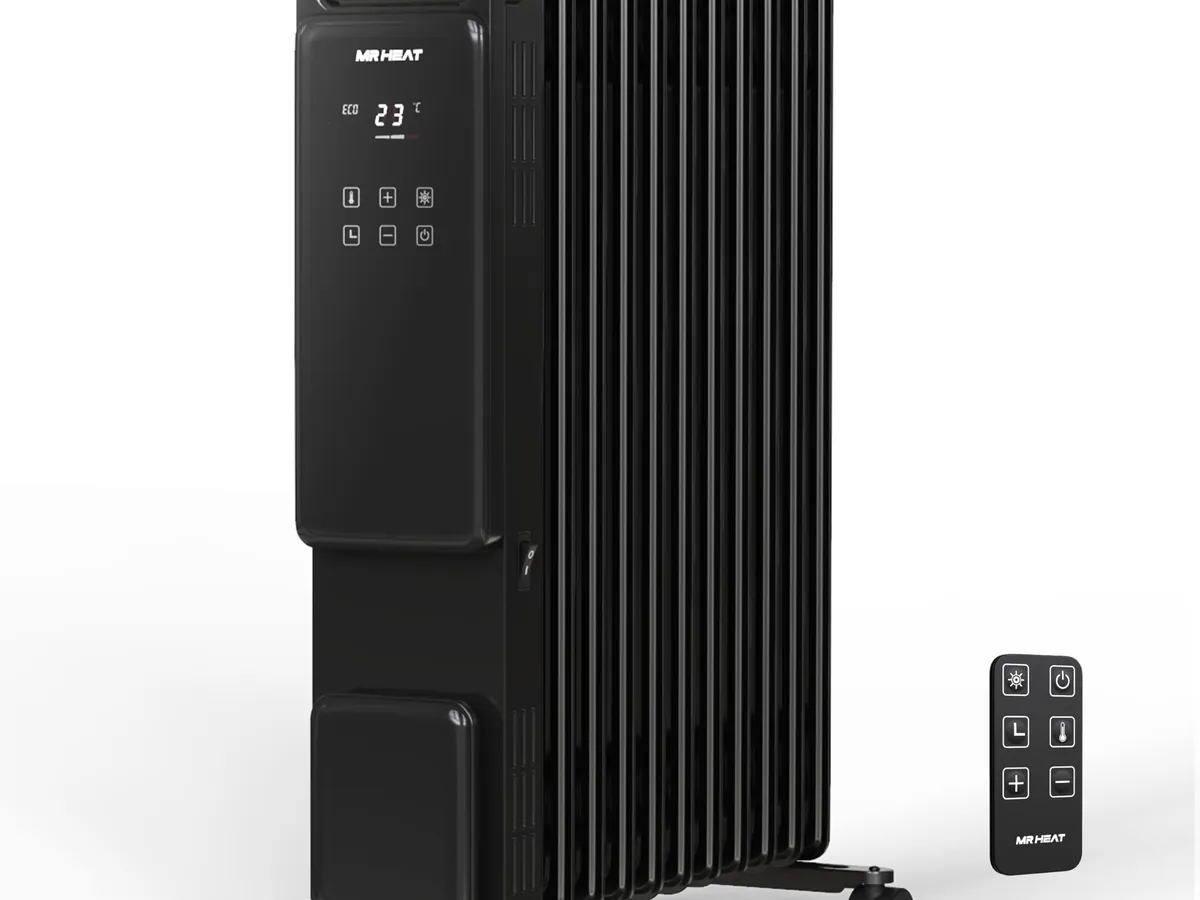
Wattage is the number that decides everything else. The table below runs the actual figures through this page's calculator at the U.S. average rate of 18.31¢ /kWh, so you can see the running cost jump as the load climbs. Change any value above and the whole page recalculates.
| Watts | Power draw | Per hour | Per month (6 h/day) |
|---|---|---|---|
| 200 W | 200 W draws 0.20 kW | $0.037 | $6.68 |
| 1,135 W | 1,135 W draws 1.14 kW | $0.21 | $37.93 |
| 2,065 W | 2,065 W draws 2.06 kW | $0.38 | $69.01 |
| 3,000 W | 3,000 W draws 3.00 kW | $0.55 | $100 |
Basis: July 2026 U.S. average residential rate of 18.31¢ /kWh (EIA Electric Power Monthly, Table 5.6.A). Your state's rate is applied as soon as you pick it above.
Monthly cost scales almost linearly with daily hours. Cutting a 12-hour habit to 6 hours halves the bill; the wattage is usually fixed at 1,500 W by the unit itself.
We use the EIA's published residential average price by state (Electric Power Monthly, Table 5.6.A). Your utility's exact 'price to compare' on your bill may sit slightly above or below the state average depending on your provider.
A heater holding a set temperature doesn't draw full power all day. Expect a real-world duty cycle of 40–70% in a reasonably sealed room, which is why a theoretical $50/month often lands closer to $25–35 on the bill.
Biggest savings first.
12 hours a day at the U.S. average rate (18.31¢/kWh) is about $100/month; 24 hours a day is roughly $200/month. Those are flat-out figures — thermostat cycling usually trims 30–60% off in practice.
A 1,500 W heater uses 1.5 kWh per hour of element-on time. At 6 hours a day that is 274 kWh per month (about $50 at the U.S. average rate). At 2 hours a day it is 91 kWh.
It can be — if you heat only the room you're in and let the rest of the house sit a few degrees cooler. That is zone heating. If the space heater runs on top of normal central heating, it simply adds to the bill.
Rate basis: EIA residential average, July 2026 (retrieved from Electric Power Monthly Table 5.6.A). Estimates are for planning, not billing.