Skip to content

Pool Pump Cost per Month

Updated July 2026 rate dataLiving & Major LoadsSourced from ENERGY STAR — Pool Pumps

Pump power scales with the cube of rpm, so a variable-speed unit moved to a lower setting and run longer turns over the same water far more cheaply. Set your pump's draw, daily hours, and state below.

Quick pick

EIA residential average, July 2026. Your utility's exact rate is on your bill.

Rate applied
18.31¢ /kWh
U.S. average

1,100 W
300 W3,000 W
8 h
1 h24 h
Common setups

Live cost meter · running at your current settings
$0.00000
since you opened this page · 0:00 elapsed
1.10 kW · 0.0000 kWh burned
burn rate
$0.20/hr
24/7 ≈ $147/mo

Real-time math: 1,100 W × your state's rate, accumulating live.

Per hour
$0.20
Per day
$1.61
8.8 kWh
Per month
$49.01
268 kWh
Per year
$588
3,212 kWh

Run like this for a year and it adds about $588 to your electricity bill.

Hours matter as much as watts: VS pumps run longer at lower speed to turn over the same water. Presets above reflect typical single-speed and VS configurations.

Energy: 8.8 kWh per day · 3,212 kWh per year, at 18.31¢/kWh (U.S. average).

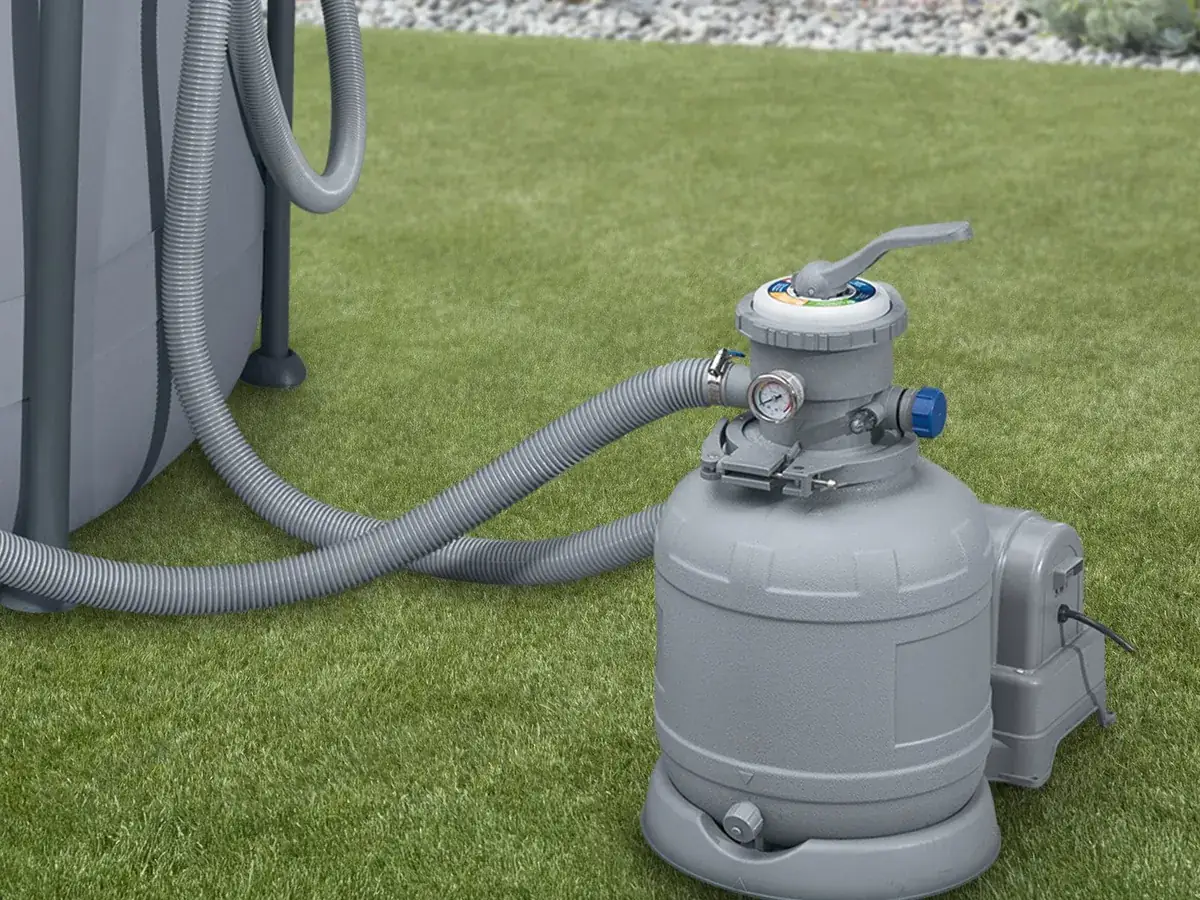
A swimming pool with its pump equipment on a sunny day

How many watts does a pool pump use, and what does it cost to run?

Wattage is the number that decides everything else. The table below runs the actual figures through this page's calculator at the U.S. average rate of 18.31¢ /kWh, so you can see the running cost jump as the load climbs. Change any value above and the whole page recalculates.

Watts and running cost for a pool pump at the U.S. average rate
WattsPower drawPer hourPer month (8 h/day)
300 W300 W draws 0.30 kW$0.055$13.37
1,200 W1,200 W draws 1.20 kW$0.22$53.47
2,100 W2,100 W draws 2.10 kW$0.38$93.57
3,000 W3,000 W draws 3.00 kW$0.55$134

Basis: July 2026 U.S. average residential rate of 18.31¢ /kWh (EIA Electric Power Monthly, Table 5.6.A). Your state's rate is applied as soon as you pick it above.

What changes the number

Single vs. variable speed

Pump power scales with the cube of rpm — half speed costs roughly one-eighth the power. Running 12 hours at low speed turns over the same water as 6 hours at full speed for a fraction of the energy. This is the whole variable-speed pitch, and it's physics, not marketing.

Turnover requirement

Pools need all water filtered about once a day (often less in practice). The strategy is meeting that turnover at the lowest speed that keeps water clear — an oversized pump at full throttle is the expensive default.

Season length

Northern pools run 4–5 months a year; Sun Belt pools run year-round. Annualized, a Florida single-speed habit can cost $600+ while a VS equivalent stays under $200.

Cut the cost

Biggest savings first.

  1. If you're on a single-speed pump, cut runtime to the minimum that keeps water clear — test down an hour at a time.
  2. Run the pump off-peak if your utility has time-of-use pricing.
  3. Compare your current pump's measured use with the variable-speed model's estimate, and check local rebates before deciding whether the upgrade cost is worthwhile.
  4. Keep the skimmer basket and filter clean; a clogged filter makes any pump work harder.

Frequently asked questions

How much does a pool pump cost per month?

Single-speed 1 HP at 8 h/day: about $49/month at the U.S. average rate (18.31¢/kWh). Variable-speed at low speed for longer hours: typically $12–25/month for the same turnover.

How many hours a day should I run my pool pump?

Enough to filter all the water once daily — typically 6–10 hours for a properly sized pump, often less with good circulation. Watch water clarity and adjust down; more hours is not cleaner, just costlier.

Is a variable-speed pool pump worth it?

For most pool owners, yes: energy savings of 60–80% pay back the price premium in 1–3 years, and many utilities offer $100–300 rebates. At the U.S. average rate a single-speed habit can burn $500+/year that a VS pump cuts to $100–200.

Sources

Rate basis: EIA residential average, July 2026 (retrieved from Electric Power Monthly Table 5.6.A). Estimates are for planning, not billing.

Keep calculating