Skip to content

Dehumidifier Cost per Hour

Updated July 2026 rate dataHeating & CoolingSourced from ENERGY STAR — Dehumidifiers

The built-in humidistat is the real controller: the same unit barely runs in dry weather and works most of the day in a damp summer basement. Set your unit's size, daily runtime, and state below for the exact number.

Quick pick

EIA residential average, July 2026. Your utility's exact rate is on your bill.

Rate applied
18.31¢ /kWh
U.S. average

500 W
200 W900 W
10 h
1 h24 h
Common setups

Live cost meter · running at your current settings
$0.00000
since you opened this page · 0:00 elapsed
0.50 kW · 0.0000 kWh burned
burn rate
$0.092/hr
24/7 ≈ $67/mo

Real-time math: 500 W × your state's rate, accumulating live. Thermostatically controlled units cycle on and off, so average use is usually below the flat-out figure.

Per hour
$0.092
Per day
$0.92
5 kWh
Per month
$27.85
152 kWh
Per year
$334
1,825 kWh

Run like this for a year and it adds about $334 to your electricity bill.

Energy: 5 kWh per day · 1,825 kWh per year, at 18.31¢/kWh (U.S. average).

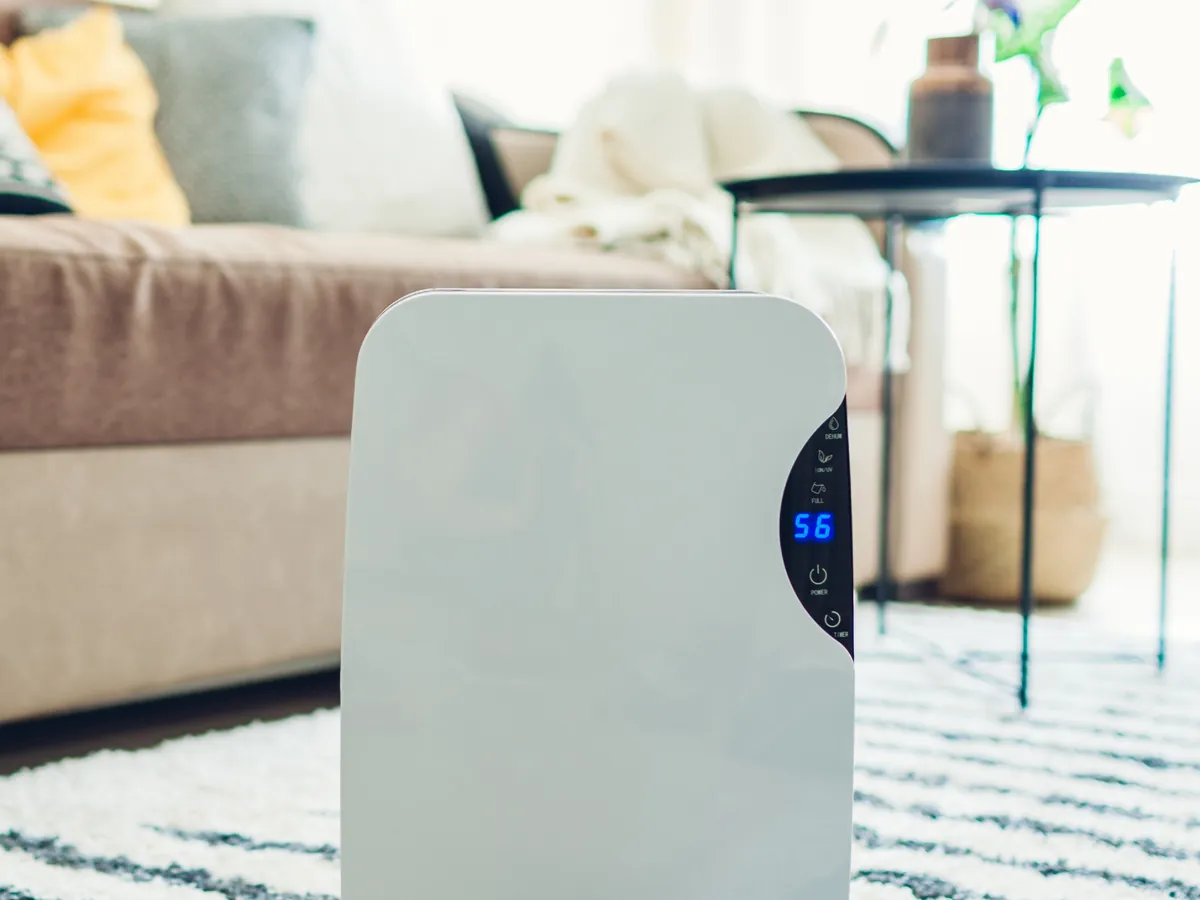
A dehumidifier standing in a home utility room

How many watts does a dehumidifier use, and what does it cost to run?

Wattage is the number that decides everything else. The table below runs the actual figures through this page's calculator at the U.S. average rate of 18.31¢ /kWh, so you can see the running cost jump as the load climbs. Change any value above and the whole page recalculates.

Watts and running cost for a dehumidifier at the U.S. average rate
WattsPower drawPer hourPer month (10 h/day)
200 W200 W draws 0.20 kW$0.037$11.14
435 W435 W draws 0.43 kW$0.08$24.23
665 W665 W draws 0.67 kW$0.12$37.04
900 W900 W draws 0.90 kW$0.16$50.13

Basis: July 2026 U.S. average residential rate of 18.31¢ /kWh (EIA Electric Power Monthly, Table 5.6.A). Your state's rate is applied as soon as you pick it above.

What changes the number

Size (pints per day)

Dehumidifiers are rated by water removed per day. Bigger rated units draw more watts (a 70-pint unit ≈ 700 W vs. 300 W for a 20-pint), but they reach the set humidity faster and cycle off sooner — sometimes making them cheaper per pint of water removed.

Humidity is the thermostat

A unit set to 50% relative humidity in a damp summer basement may run most of the day; in dry weather the same unit barely runs. Cost tracks the compressor's actual runtime, which the built-in humidistat controls.

Whole-house vs. single room

Portable units treat one space. If your humidity problem is the whole house, a whole-home unit on the HVAC system is a different cost structure — usually higher wattage but smarter control.

Cut the cost

Biggest savings first.

  1. Set 45–50% RH, not lower — chasing 35% makes the compressor run far more for marginal comfort benefit.
  2. Close doors/windows in the treated space; an open basement door makes the unit dry the whole neighborhood.
  3. ENERGY STAR models remove the same water for roughly 15% less energy than standard units.
  4. Empty the tank promptly or use the drain hose — a full-tank shutoff means your runtime does zero work.

Frequently asked questions

How much does a dehumidifier cost to run per month?

A 480 W medium unit running 10 hours a day costs about $26/month at the U.S. average rate (18.31¢/kWh). Running 24/7, it would be about $62/month — real usage is usually between because the humidistat cycles it off.

Do dehumidifiers use a lot of electricity?

They are mid-weight loads: 300–700 W, comparable to a large window fan at the low end and a small space heater at the high end. The runtime is what makes the bill noticeable — damp basements can run them 12–24 hours a day in humid weeks.

Is it cheaper to run a dehumidifier or an air conditioner?

For removing moisture alone, a dehumidifier is cheaper — it treats humidity directly while an AC cools air to condense water as a side effect. If you also want cooling, the AC does both jobs in one pass.

Sources

Rate basis: EIA residential average, July 2026 (retrieved from Electric Power Monthly Table 5.6.A). Estimates are for planning, not billing.

Keep calculating