Wattage and cook time
Cost per minute scales with the wattage, but higher-wattage ovens finish faster — the net cost of reheating a plate is nearly identical across models.
Popular calculators
Updated July 2026 rate dataKitchen & LaundrySourced from U.S. EIA — Electricity use in homes (end-use shares)
A microwave heats the food itself rather than the air around it, so the relevant inputs are its wattage and how many minutes you actually run it. Set your daily use and state below for the per-minute figure.
EIA residential average, July 2026. Your utility's exact rate is on your bill.
Real-time math: 1,200 W × your state's rate, accumulating live.
Run like this for a year and it adds about $20 to your electricity bill.
Cooking power (what the label says, e.g. 1,200 W) is the output; input draw is slightly higher. Cost differences here are small enough that convenience can decide.
Energy: 0.3 kWh per day · 110 kWh per year, at 18.31¢/kWh (U.S. average).
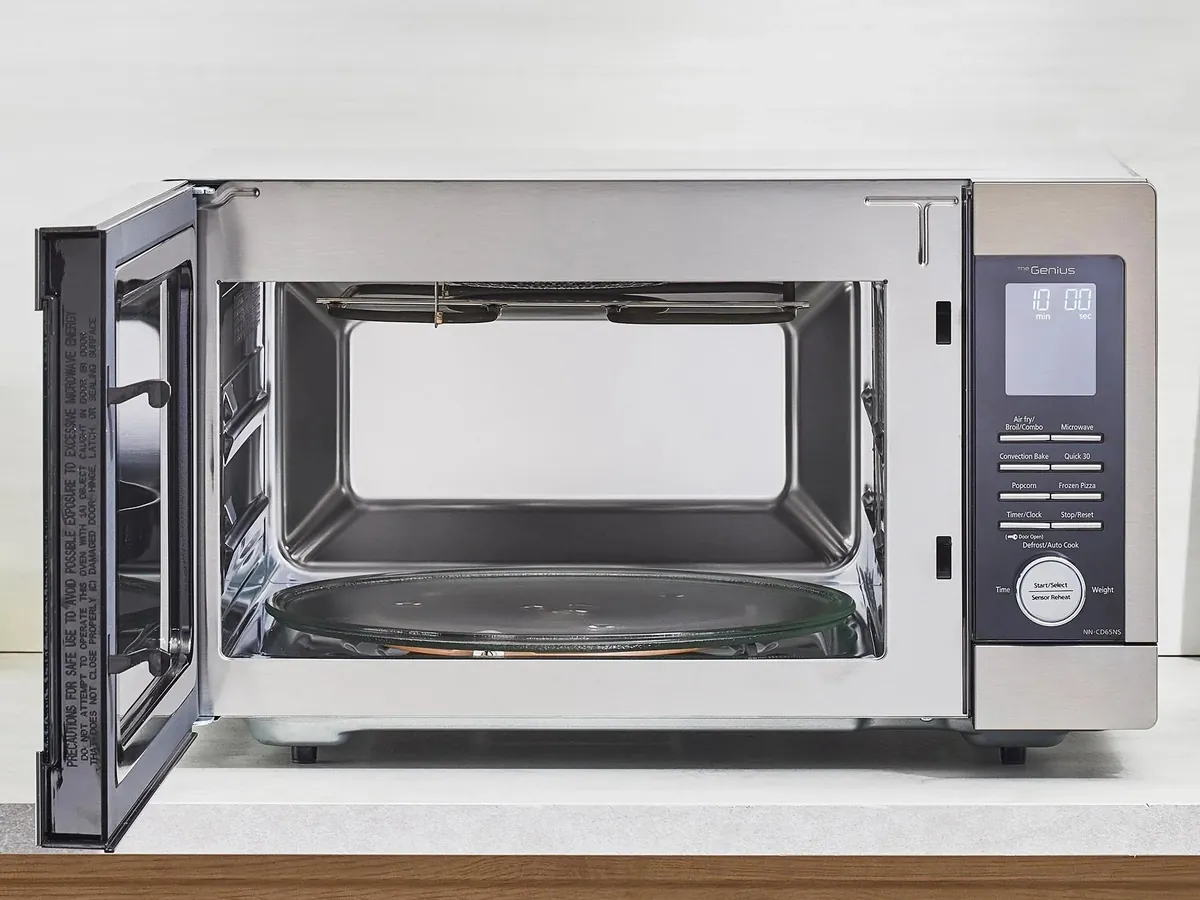
Wattage is the number that decides everything else. The table below runs the actual figures through this page's calculator at the U.S. average rate of 18.31¢ /kWh, so you can see the running cost jump as the load climbs. Change any value above and the whole page recalculates.
| Watts | Power draw | Per hour | Per month (0.25 h/day) |
|---|---|---|---|
| 600 W | 600 W draws 0.60 kW | $0.11 | $0.84 |
| 1,000 W | 1,000 W draws 1.00 kW | $0.18 | $1.39 |
| 1,400 W | 1,400 W draws 1.40 kW | $0.26 | $1.95 |
| 1,800 W | 1,800 W draws 1.80 kW | $0.33 | $2.51 |
Basis: July 2026 U.S. average residential rate of 18.31¢ /kWh (EIA Electric Power Monthly, Table 5.6.A). Your state's rate is applied as soon as you pick it above.
Cost per minute scales with the wattage, but higher-wattage ovens finish faster — the net cost of reheating a plate is nearly identical across models.
For single servings and reheats, the microwave wins big: an electric oven draws 2,400 W and heats a whole cavity, while a microwave heats the food directly in minutes.
A clock and electronics draw 2–4 W around the clock — roughly $0.50–1/year at average rates. Not worth unplugging, but worth knowing.
Biggest savings first.
About 0.3–0.4¢ at the U.S. average rate (18.31¢/kWh) for a 1,000–1,200 W model — a tenth of a cent per 20 seconds.
At 15 minutes a day, roughly $1.10/month at the U.S. average rate. Heavy use (45 min/day) is still only about $3.30/month.
It draws real power (700–1,800 W) but runs for minutes, not hours — total monthly use is tiny compared with almost everything else in the kitchen.
Rate basis: EIA residential average, July 2026 (retrieved from Electric Power Monthly Table 5.6.A). Estimates are for planning, not billing.